Tuesday, June 6, 2017

Superhero Swap! (A Quick Write on Which Superhero (or Villain) I’d Trade Places with (Magneto!))


A quick write on which superhero (or villain) I’d trade places with! Here I choose Magneto, for neither category:


The soft clicking of fingers against a keyboard fills my room, harmonious with the symphony of rain whispering at the window and wind rustling the trees outside. It’s stormy today.

Every tap of a key sends a current of electricity to the computer, like a trickle of sweat down skin, a soft secret whispered in your ear.

My metal necklace hangs heavy. I reach up to touch it, feeling the molecules, the very structure of each atom resonating with a reservoir of energy. With a twitch of my pinky, the metal melts into the shape of a raindrop.

Outside, the storm grows angry. Every lightning bolt that splits the sky in half feels like energy splintering into spidery veins, like soft but fizzy soda under your tongue.

It seems like I’m working, but the superpowers of Magneto make even ordinary tasks extraordinary.

Even if it weren’t the age of technology, magnetism and metal are everywhere.

The iron in my blood sings to me quietly, humming a song in concert with the storm and the rain; every heartbeat is a wave, like the pulse of the ocean. Even quieter is the low rumble of the electromagnetic fields that surround the earth, encasing all of us in a nearly inaudible song. Quieter still is the earth and all of the metal within, breathing softly, so as to not disturb its people.

And, at the forefront of it all, I am the conductor, bringing all of these sounds together in cocktail that fits into the curve of my ear, transforming metal into song.

Wednesday, May 24, 2017

Summer Poetry (Entry to the Live Poets Society “JUST POETRY” Contest)

Summer arrives with a storm one quiet night
Rain knocking gently at the windows, wind whispering at the door

And every day the children play in the sun
Their metal zippers and shiny buttons and deciduous teeth blinking up at the endless sky
As they pretend to be princesses and peasants and dragons

Summer carries reminders of the old country
The smell of earth before rain, blue Niltava feathers, wooden fishing boats, and sweet lychee

And every night the children sprawl on the grass
Staring up into the blinking sky
Their faces open and unreserved and endless just like the world seems to be around them

Summer unearths warm stories of the past, once buried with dirt and dust and disuse
A princess adorned with rings and phoenix feathers, a boy with a boat and a pocket of dreams
A dragon older than time, living in the cracks between the sky and the shoreline, endlessly

The children listen to the storm, to their parents’ stories, to the rustle of the wind and rain

Their limbs grow tan and supple with the day’s warmth and play while
Their greedy fingers tug on father’s earlobes, mother’s elbows, demanding more

More stories to fill their heads, to fill their days, to fill their dreams

Summer leaves quietly, and it turns into another autumn that is crisp as an apple
But every evening, when the sky yawns and the dragon bellows out its orange fire
There remains the sweet refrain of imagination, echoing endlessly.


This poem was my entry to the Live Poets Society of New Jersey annual “Just Poetry!” contest! I am grateful that my work will be published in the 2016-2017 topical anthology entitled "My World," a "meaningful study of introspective poems written by teenagers for teenagers, which explores how today's teens view their world and where they see themselves fitting into today's complex moral and social issues." It is scheduled for publication in late June.

Saturday, May 6, 2017

Experiencing Teton Through the Lens of Science

A worn path winds around Walden Pond, separating the woods and a wooden hut. The earth of the trail is soft and molded to the shape of bare feet. For Henry David Thoreau, this path represents a track for someone’s life, the distinction between nature and society, society and science. For different people, the path can mean many different things. For me, the path is less of a line and more of a bridge, less of a barrier and more of a bond that brings people together.
From events in Science Olympiad -- like Topography and Forestry -- to high school courses -- biology, chemistry, environmental science -- learning about science is learning about the world around me. The two subjects often blur: for me, science is a lens that you can use to view nature, and I love it! Especially hands-on activities: working in labs, using micropipettes and centrifuges, neutralizing reactions and determining species of trees from leaf structure. And although I’ve learned much from my classes, laboratory experience pales in comparison to researching in a national park. There’s still much to learn about science, and through science, nature: how can I use chemistry to learn about soil, or use Punnett squares to predict the color of young sprouts? How can I use science as a tool to find the optimal balance between conservation and development?
Moreover, for me, science is a way to connect to the people around me. In my community, there are no lone scientists; science brings people together. As an editor and regular contributor to the international Journal for Youths in Science (JOURNYS), I review and analyze new scientific discoveries before putting together what I’ve learned in an article, sharing my research and knowledge with friends and teachers. Readers and editors pore over new articles together, learning together. Additionally, given opportunities such as the San Diego Festival of Science & Engineering, I participate in outreach programs, volunteering to demonstrate pH indicators, meeting students interested in science and working with professional scientists. I also coach Science Olympiad at a local middle school, putting together materials for my students to study. Through volunteering and teaching, I’ve realized the importance of cooperation and communication and built importance bridges to other people around me, all thanks to science.
I’ve learned much from science: how to use gel electrophoresis; how to cooperate in team efforts like Science Olympiad; how to analyze and compile data in a research project. To further this education, I’d like to participate in camp at Grand Teton National Park and apply these skills -- both people skills and science skills -- in a hands-on environment, alongside students with similar aspirations and under the guidance of instructors, bringing all of my skills together in the best ways possible, continuing to explore the areas where science, nature, and people overlap.


I submitted this essay to the Elementary Institute of Science and was fortunate enough to win a scholarship to attend the Jackson Hole Expeditions in Yellowstone and Teton National Park for a month this summer! I will write all about my experience as soon as I can!

Saturday, April 22, 2017

Lapis Lazul Across the Map and the Ages

Mesopotamia, the fertile valley between the Tigris and Euphrates rivers, home to the world’s earliest civilizations: the Sumerians, Akkadians, Babylonians, Assyrians. From the Epic of Gilgamesh to cuneiform to Hammurabi’s code, this land has birthed many great accomplishments still recognized to this day. However, not all of these ancient works were literature. One of the most influential kings of Babylon -- Nebuchadnezzar II -- was known for his extravagant architecture and decoration, from the hanging gardens of Babylon to his ziggurat tower.


One of my favorite remnants from this time period is the enormous and intricate Ishtar Gate, which is decorated with giant lions and bulls in honor of the goddess Ishtar. Constructed in ancient Babylon, the entryway is a capsule of values and traditions from Mesopotamian times, covered in shimmering blue lapis lazuli that would’ve been brilliant in the context of a desert. Here is an image of the gate:


Nebuchadnezzar, recognizing the cultural and aesthetic importance of his gate, wrote an inscription: “I, Nebuchadnezzar, laid the foundation of the gates down to the groundwater level and had them built out of pure blue stone. Upon the walls in the inner room of the gate are bulls and dragons. And thus, I magnificently adorned them with luxurious splendor for all mankind to behold in awe.”

As stated in Khan Academy’s video, “And [here] we are in awe two and a half millennia later. Nebuchadnezzar understood his place in history… wrote inscriptions in his [creations] that not only identified them but also asked future rules to rebuild them for him. It’s as though he knew that empires come and go, and that he could speak across history.”


This same ultramarine lapis lazuli is valued across many cultures and nations, from Badakhshan to Siberia to the Hindu Kush mountains. The deepest blues of lapis lazuli were most valuable; the highest quality lapis lazuli could be turned into a pigment by grinding down the rock and carefully purifying the powder.


This beautiful blue can then be used to decorate manuscripts from all over the globe, including European, Persian, and Armenian manuscripts.


Sources


"Ishtar gate and Processional Way." Khan Academy. Web. 22 Apr. 2017.

"Exploring Ultramarine." Bodleian Libraries. Web. 22 Apr. 2017.

Friday, April 21, 2017

A Feast for Samurai Warriors, And Me (A Study of Japanese Bento)

Hello Kitty made of onigiri rice balls, hot dogs shaped like octopus and snails, colorful carrots and apples in the shapes of rabbits and bunnies -- all of these cute characters and animals are stars in the Japanese bento meal, a hallmark of Japanese cuisine since the 1600s.


Even in Japanese culture today, traditionally, the Japanese do not eat while walking. This polite etiquette can be traced back to the samurai. In fact, the samurai were the ones who carried elaborate bento meals in tiered, lacquered boxes on long journeys, because it was not customary to eat in public places. Though originally designed for mobility and practicality, the bento has become a representation of Japanese culture and Japanese values today, as I discovered in my bento project for Japanese!


The most important aspect of the bento is its longevity. For samurai warriors, travelers, or people who worked outdoors, the pickled foods inside bento are convenient. Also, bento do not need to be warmed necessarily to be delicious, making it the perfect food for the traveler!


Now, bento are available everywhere in Japan: department stores, convenience stores, train stations, and even through take-out! But the essentials of bento -- underneath the cute decorations and colors modern-day bento are now adorned with -- are still visible! For example, like I mentioned earlier, pickled foods, or “tsukemono” in Japanese, such as pickled daikon, radish, and eggplant can be found in most bento. Bento are traditionally very healthy, and contain various types of foods: steamed, boiled, fried foods; and vegetables, fruits, and meats. They offer an array of colors, shapes, textures, and tastes, delicious both in taste as well as looks! Moreover, bento are neat and compartmentalized, with each separate food in its own section; the sections are often divided with ornamental plastic grass.

With this history and these values in mind, I set off and created my own bento -- using pickled foods, vegetables, meats, rice and various colors, tastes, and textures to try and capture the essence of bento and Japanese culture. Here are a few photos!


Here's a reflection in Japanese!

メルバ ヌゼン, 2017 年 4月14日, 弁当 の プロジェクト

日本 の 弁当 の 中 に 日本 の 文化 と かちかん が あるし,  おいしいし, 私逹 は 日本 の 食べ物  が 大好きだ。日本 の 弁当 と 西洋的 な お昼ご飯 は ちょっと ちがう。 最しょに, 日本 の 弁当 は とても けんこう的 で 長持ちする。 いろいろ な 色 が 見られ, 弁当 は きれい で 美しい。 弁当 は とても そしきてき で きれいだ から, 弁当 を 食べる事 は べんり だ。私逹 の 弁当 の テーマ は 動物 だ ! とくに 森 の 動物 と 海 の  動物 だ。 私逹 の 弁当 は 二そうだ。一そう は 森 の物 で, 二そう は 海 の 物 だ。

最しょに, 弁当 の 中 に いろ いろ な 東洋的 な 食べ物  が あってから,  弁当 は とても けんこう的だ。 たとえば, あげ物 や つけ物 や に物 や やさい が ある。 私逹 は 天ぷら という あげ物 を 作った。 き色 な エビ 天ぷら は とても クリスピーだ。 森 の 物 の そう で, やわらかい チャーハン が ある。弁当 の 中 に, たくあん という つけ物 は エビ天ぷら の となり に ある。そして, も たくあん という つけ物 が ある。かたくてき色 な たくあん は とても おいしい だ。山 から の 物 のそう で やわらか くて むらさき な ナス や みどり な きゅうり や たくあん が ある。それから, つけ物 の となり に, やさい が ある。 たとえば, にんじん や したけ や ブロッコリー や レタス が ある。オレンジ で かたい にんじん は とても けんこう 的 だ。あかくてまるい かたち な いちご と りんご が ある。そして, 私逹 の 弁当 の 中 に いろいろな 肉 が ある。たとえば,  ホットドッグ と エビ 天ぷら という 海の物 だ。最後 に, に物 が あって, たまご と ホットドッグ が ある。

    そして, 二番目 持ちょう は お弁当 の 中 に, いろいろ な かざり と 形 が あって から, お弁当 を 見る事 は とても きれい で かわいい。私逹 の 弁当 の 一そう で 森 の 動物 が ある。おにぎりは いろいろな 森の動物 の だ。たとえば, ねこ や ぶた や うさぎ だ。ホットドッグ の 形 は かたつむり だ。りんご は うさぎ の 形 だ。ねずみ の 形 な たまご は チャーハン の 上 に ある。とても かわいい 形 だ! そして, いろいろ な かざり な 食べ物 が ある。たとえば, き色な たくあん と オレンジ な にんじん は 日 の 形 だ. みどり な ブロコリ は 森 の 木。それから, 私逹 の 弁当 の 二そう で 海 の  動物が ある。わかめ サラダ の となり に, タコ の 形な ホットドッグ が ある。 にんじん は 魚 の 形 だ。にんじん 魚 は ふりかけ の 海 に およぐ。 しいたけ は カメ の 形 だ。そして, お弁当 は 右 と 左 と 上 と 下 の 違い が ある。きす の 物 が 多い。 たとえば, たまご ねずみ が 一 匹 (ひき) あって, りんご うさぎ が 三匹 あって, おにぎり 動物 が 五匹 ある。最後に, 私達 の 弁当 の 中 に, きせつ の 食べ物 が ある。日本 で, 夏 の 食べ物 は ナス や きょうり や レタス だ。この きせつ の 食べ物 は 私達 の 弁当 の 中 に 見る 事 が 出来る。そして, しいたけ という 日本 の 春 の 食べ物  も ある。私達 の 弁当 の 冬 の 食べ物 は だいこん や いちご や りんご だ。

    次に, 三番目の特ちょう は, 私達の弁当はとてもきれいだ。伝統的な 弁当 で はないけど、色々な伝統的な作り方を使った。まず、最初に、とても大切なことは食べ物が小さく切ってあることだ。こうすれば食べやすいし、お弁当箱に入れやすいし、便利だ。これをさらにもっと便利にするためにちがう食べ物を分けておいてある。ちがう食べ物がアルミのカップとみどり色の草の形をしたプラスチックで分けてある。そして, お弁当 は とても べつべつ だ。私達 は 安い 食べ物 を 使った ので, 弁当 を 作る 事 は べんり で 安い。弁当 は 青い 弁当箱 (ばこ) に 入れて, 学校 へ 持って行く。最後に, おはし で 私達 は お弁当 を 食べます。

けつろんとして, 私達 の 日本 の 弁当 は とても  おいしい!  大好きだ。この 弁当 を 作りながら 日本 の 文化 の 事 を たくさん 勉強 を した。 たとえば, なぜお弁当 の 中 の 食べ物が 分けてあるか。 アメリカ で もそういうこと を習った 方 が いい と 思う。 お弁当 は 日本のきちんとした所 を よくひょうげん する。こんど 日本 の マーケット 行った 時お弁当 を 買ってね!

Sunday, April 16, 2017

A Faded Fairytale (Perspective of a Melting Pot from the Daughter of Immigrants)

For as far back as I can remember, stories entwine with my memories from childhood. Memories of Harry Potter and fairy tales and oral rememberings from my parents have been worn down, soft and dull and subdued, from being handled by my clumsy hands one too many times. They are fond memories.

But recently, I’ve realized that the mystic, fantastical air with which my parents tell stories sometimes shroud the truth underneath. Here’s a poem that I wrote about it.

Once upon a time, they are just stories. Once upon a time, she listens to them with awe: tales of magical beasts, ancient kingdoms, and endless seas that have hungry, filching hands awaiting escapees and adventurers alike. She learns of humid rain and the smell of earth before a storm; through these stories, she tastes sweet lychee and raw coconut; she learns to build boats with her bare hands and -- from her concrete jungle of a city -- she dreams of the old country, her thoughts laced with nostalgia and stained with syrupy condensed milk and blistering tropical sun.
Every night, right before she slips into the blurry haze between consciousness and sleep, her parents swirl stories into her thoughts.
Once upon a time, there was a princess who found unimaginable wishes at the bottom of the ocean: rich draperies and gold rings and the scarlet feather of a phoenix. Long, long ago, there was a young man by the ocean, who woke up early every morning to watch the sun blink sleepily, to sail out on the sea and surround himself with endless, endless water, waiting for the right day to sail across the ocean. In the old country, there was a slumbering dragon, its belly full of fire hotter than the sun and its wrath larger and older than the earth and its greed deeper and colder than the icy ocean.
Here, her parents tell her, here is the overlap between land and sea, a kingdom less of an empire and more of a land only loyal to the earth and the wind and the slow storms. Here, when summer comes, the plants unfurl their leathery fronds; the earth begins to move slowly, like a great beast stirring into consciousness. The dirt and soil drinks in the clean rain and the soft smell of petrichor releases from a yawning maw as the beast awakens. Storms crackle over the horizon and the dragon flexes its poisonous claws, unfurls its leathery wings. Here is the edge of the world, here is the line between sea and skyline, they say, and here is how you cross it.
She asks for more stories every day, reaches out with sweaty palms to ask for more, as if these stories are real, as if they are reminders that can fit into the palm of your hand, remnants of a past life that fit in the hollow of your cheek so you can bring them on a small boat across the sea.
In school, her chubby fingers grab fat red crayons to carve mountains and fire and dragons out of printer paper.
Her mother tells her of the food there: tin Tiffin boxes and enormous bowls of rich pork broth, carrying poles with enormous woven baskets on either side, the banyan trees peering down on curdling goat’s milk; her father tells her of a revolution: an endless fleet of boats -- like fish swimming desperately up a stream -- fleeing a harbor, out of the maw of the beast and into the hungry, filching hands of the sea. Here is the match that lit the flame, they say, here is the call that woke the beast; here is fire and here is fury and here is how you leave.
    Outside of her open window, the city calls, a screeching cacophony of urban traffic and the rush of life, a constant reminder of where she lives, of where she will have to go. She wonders where she belongs. She wonders where she has to go. On her desk, her notebook paper rustles with the wind. She picks up her pen.
    Once upon a time, she believed they were just stories.
    She grows older and realizes that they are not just stories.
    Once upon a time, she’d never seen anything with a knife for a tongue or creatures with poison-tipped claws; maybe she believed those stories were fantasy because it wasn’t possible to understand, it was so difficult to comprehend. How can you understand a wildfire when you’ve only used small matchsticks to keep warm? How can you understand what it takes to leave your home behind when home is where you’ve lived your whole life?
And how could she know? She will never feel the insistent flames of a revolution or that horrible, dark fear of no land past the sea, of no wind filling the sails; will never come face to face with beasts as ancient as dragons. But perhaps, she will face mountains of steel and birds of metal instead, swap out dark jungles for concrete cities.
    Either way, she has her stories.
And in the end, they are still stories. Except they’re slightly starchy with grains of truth, a little gritty on the tongue, slightly bitter with a worldliness and a deep kind of hunger too powerful to be made up; but, after all, aren’t the best stories the ones of our own lives?
Once upon a time, there was a girl who lived in a world half-fantasy and half-reality, living the best kind of lucid dream, between the sky and the shoreline, between the past and the future, between kingdoms and democracy.
She is insatiable; she is young and she wants the world. She wants blistered skin from the tropical sun and treasures from the bottom of the greedy ocean and a fang from the yawning maw of the beast. She lives with once upon a time and long long ago and in the old country tucked into the space between her molars and her cheek, small enough to fit in the hollow of her cheek, to bring with her wherever she goes. When she smiles, the edges of her lips twist with the sweetness of condensed milk and raw sunshine, with the fire of a dragon’s breath. And, with that, she lives happily ever after.

Sunday, March 5, 2017

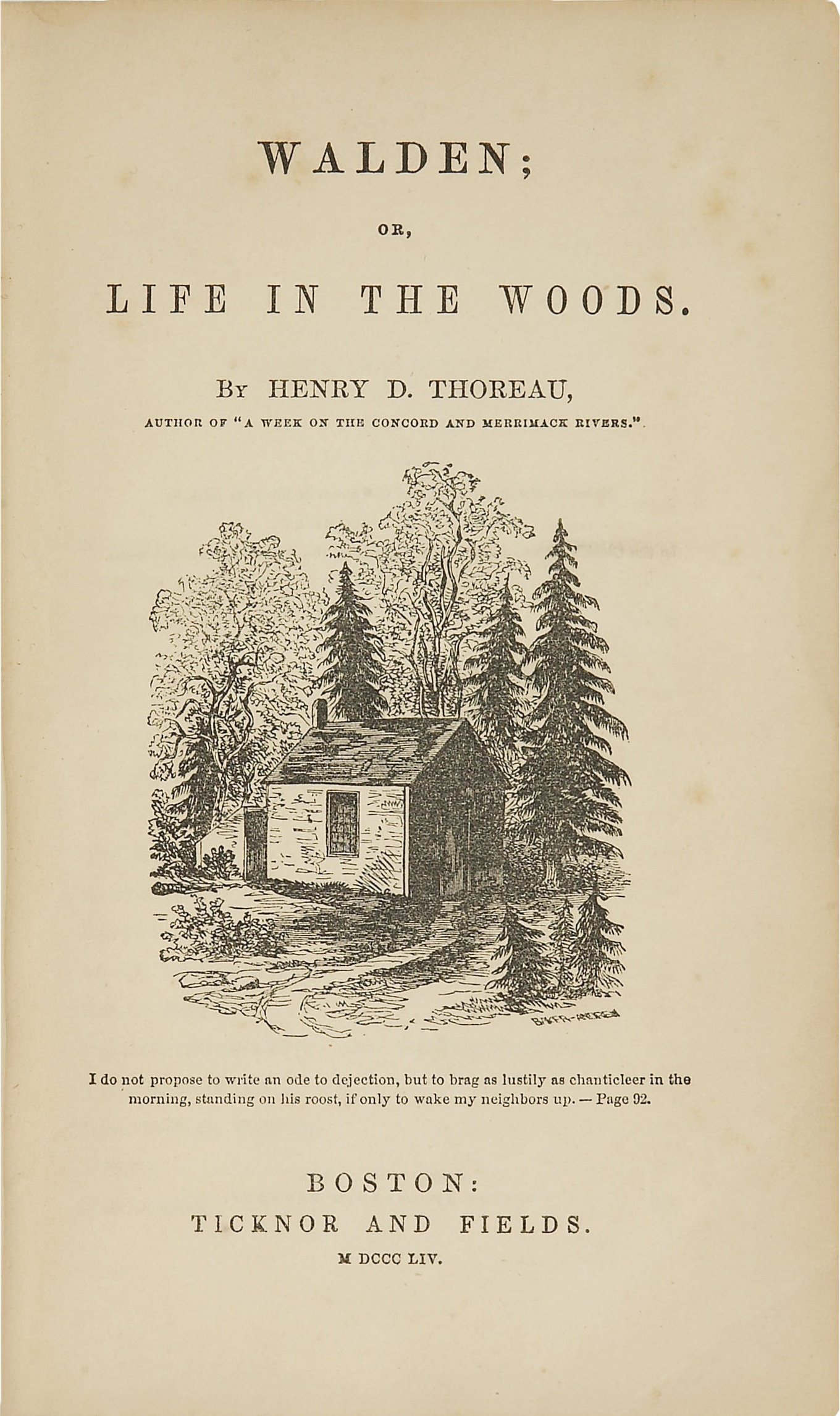
A Walk in the Woods (Analysis of Walden by Henry David Thoreau)

As one of the most prominent figures of the transcendentalist movement, Henry David Thoreau captures the heart of transcendentalism in his writing. His memoir Walden is the epitome of transcendentalist writing. At the time, transcendentalism relied on contemplation and philosophy, emphasizing “non-rational, intuitive feeling” (American Transcendentalism). Individuals who believed in transcendentalism were often recluses, or at least solitary in their lives. Transcendentalists focused on themselves, cultivating their thoughts and ideas in peaceful settings, which caused many Transcendentalists to wish to “return to nature,” where society and materialism could not reach them (American Transcendentalism). This is evident in Henry David Thoreau’s own life: Thoreau left society for two years to live in nature, near Walden Pond. Thoreau “sought to live the Transcendental life to its fullest potential,” living deliberately and thinking carefully with only nature for company (Transcendentalism). His resulting work, Walden, highlights the essentials of Transcendentalism: the purity of nature compared to society, intuitive thinking and philosophy, and solitude and individualism.
The book itself is one of many themes and topics: Thoreau discusses nature and the animals around the Walden pond, the flaws of modern society, and philosophy in regards to solitude and the world.
In the first and longest chapter, Economy, Thoreau claims that in modern societies workers are always suffering. A worker works until he becomes a machine and cannot enjoy the finer things in life. Thoreau highlights subjects such as history, poetry, and mythology to show that there is more than just work to be experienced.
Thoreau alludes to the hierarchy of needs, arguing that if man has ample “food, shelter, clothing, and fuel,” he should not need “more warmth of the same kind… more and richer food,” and more of the same basic needs he already has (Thoreau 13). Man should then move up the hierarchy, towards more intellectual and spiritual levels. In these philosophical claims, Thoreau also intersperses descriptions of his own shelter at the Walden pond: the shanty he lived in, the woods surrounding him, the materials he bought.
In the rest of Walden, Thoreau covers several topics related to each chapter. Thoreau discusses how he lives simply, but deliberately, constantly aware of his surroundings and himself. As a student, Thoreau emphasizes the timelessness and importance of knowledge, specifically the lack of access to many colleges for students.
Surrounding Walden pond are a variety of animals and plants that Thoreau carefully records and describes. The isolation of the pond and Thoreau’s descriptions of the plants that he has grown make it seem as though he has his own world.  He explains that he has no more burdens or sadness, and contemplates the meaning of closeness and solitude.
Furthermore, Thoreau claims that the serenity of nature creates an environment conducive to thought and reflection. He discusses the balance between his philosophic thoughts and his more primitive thoughts, his innate desire to live in the wild and to sit and watch the world.
Walden’s various topics are all linked together with common themes. Thoreau emphasizes the importance of living deliberately and living life to the fullest; he thinks that people should work, but should not lose themselves to work; people are all innately students, who should strive to think critically, learn, and educate themselves; society makes it easy for people to conform, but sometimes, when appropriate, breaking tradition can be beneficial; human life consists of a balance between basic needs or instincts and higher callings or spiritual thoughts; no matter the circumstances, people are always given new opportunities and life should be valued as something precious. Here are four of the most memorable quotes from Walden for me:


I.
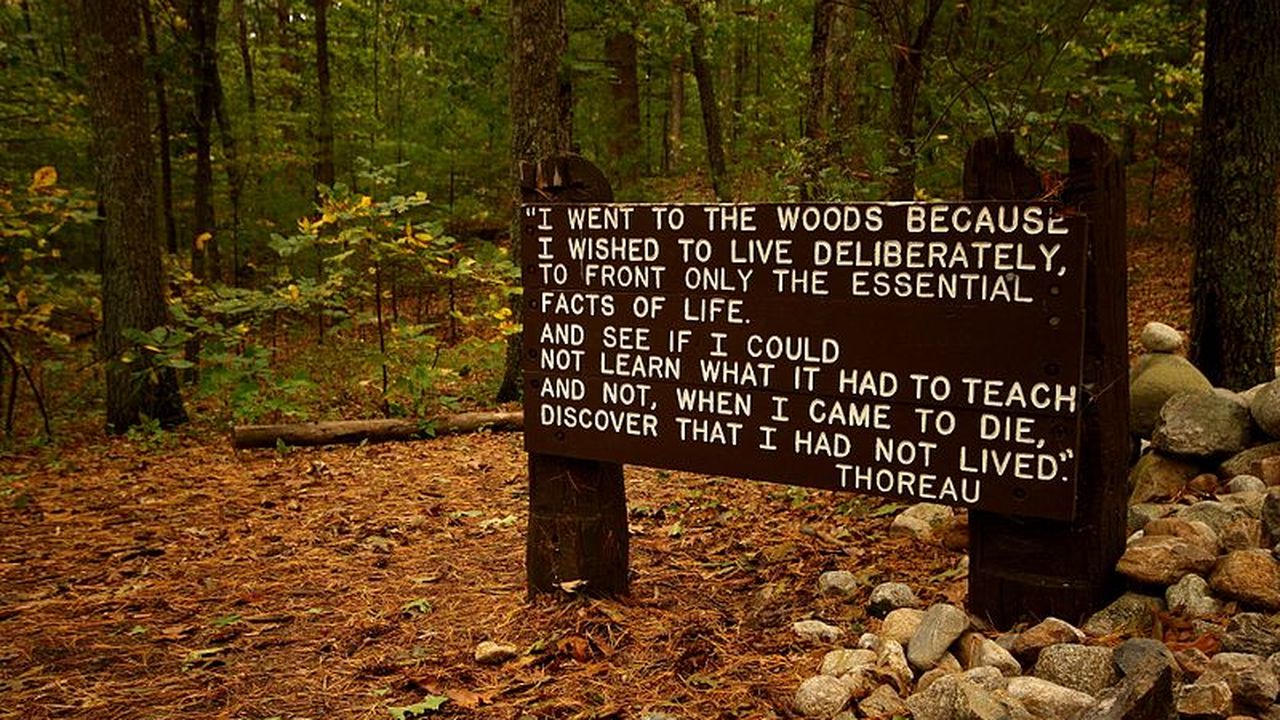
I went to the woods because I wished to live deliberately, to front only the essential facts of life, and see if I could not learn what it had to teach, and not, when I came to die, discover that I had not lived. I did not wish to live what was not life, living is so dear; nor did I wish to practise resignation, unless it was quite necessary. I wanted to live deep and suck out all the marrow of life, to live so sturdily and Spartan-like as to put to rout all that was not life, to cut a broad swath and shave close, to drive life into a corner, and reduce it to its lowest terms, and, if it proved to be mean, why then to get the whole and genuine meanness of it, and publish its meanness to the world; or if it were sublime, to know it by experience, and be able to give a true account of it in my next excursion. (87)


For the first time in Walden, Thoreau begins discussing the reason why he came to Walden Pond. He claims to want to live “deliberately,” leaving behind materialism and any chains from society (87). Thoreau wants to live “deep” and deliberate, which is reminiscent of earlier chapters when he claims that workers have fallen into easy paths, working mindlessly, without thinking. This quote captures the essence of one of Thoreau’s messages in Walden: that life should be lived to its fullest, without barriers like materialistic greeds or society’s standards; this is why Thoreau leaves society in the first place, to strip himself of the chains -- in this case, an abundance of things he does not need -- that hold him back from finding deeper meaning in life.
Earlier in this passage, Thoreau explains why waking up early can be beneficial. He believes that “to be awake is to be alive,” and that people “must learn to reawaken and keep [them]selves awake” (87), which may apply to waking up at dawn but also applies to living life. Thoreau criticizes workers and society in the previous chapter, claiming that workers have lost their grip on the finer things in life because they are too caught up in work. To counter this, Thoreau believes that living should constitute of self-discovery and thought. And to properly achieve self-discovery and thought, the other aspects of life that are not necessary must be stripped away, revealing an individual without ornamentation.


II.


This whole earth which we inhabit is but a point in space. How far apart, think you, dwell the two most distant inhabitants of yonder star, the breadth of whose disk cannot be appreciated by our instruments? Why should I feel lonely? Is not our planet in the Milky Way? This which you put seems to me not to be the most important question. What sort of space is that which separates a man from his fellows and makes him solitary? I have found that no exertion of the legs can bring two minds much nearer to one another. (130)


A major theme of Transcendentalism is isolation. Although Thoreau lives mostly in solitude in Walden, he never claims to be lonely. Many ask Thoreau whether or not he becomes lonely alone in the woods, and to this he answers by ruminating on the definition of being lonely. Even though he lives without company, Thoreau claims that such distance is relative. For instance, he thinks that earth “is but a point in space” (130), and since Earth is in the Milky Way, surrounded by other planets and stars and galaxies, he should have no reason to ever feel lonely. The distance between such bodies still is immeasurable by most scientific instruments anyway. Furthermore, Thoreau questions the meaning of solitude, asking what kind of space “separates a man from his fellows and makes him solitary” (130). To answer this, Thoreau claims that there is no correlation between physical proximity and company; even though people live close together, they can still be lonely.
And so to answer the question initially posed to him, Thoreau concludes that such space between individuals is all relative, and that, even if two people are physically close to one another, they may not be emotionally or mentally connected.


III.
Let the thunder rumble; what if it threaten ruin to farmers’ crops? that is not its errand to thee. Take shelter under the cloud, while they flee to carts and sheds. Let not to get a living be thy trade, but thy sport. Enjoy the land, but own it not. Though want of enterprise and faith men are where they are, buying and selling, and spending their lives like serfs. (202)


From the first chapter of Walden, Thoreau makes his stance on work and overworking clear: if an individual works too hard and loses sight of other things in life, that individual no longer enjoys life, and no longer has the opportunity to enjoy the finer things in life, such as literature or philosophy. This quote is the summation of what Thoreau believes life should be: a balance between work and self-fulfillment; work, but only enough to live. If individuals work too much, they become slaves to their work, without control of their lives, slaves to the economy and materialism. Man becomes machine, unable to enjoy softer things, since “the finest qualities of [human] nature… can be preserved only by the most delicate handling” (4).
This train of thought is not dissimilar from other Transcendentalist authors; in fact, in his speech The American Scholar, Ralph Waldo Emerson observes how a man working “sinks into the [role of] the farmer,” thinking of nothing but work, falling into an easy path, his soul becoming “subject to dollars.” Thoreau aptly claims that, in these scenarios, society “do[es] not ride on the railroad; it rides upon [society]” (89).
Both this memorable quote and this theme highlight one of the fundamentals of Transcendentalism.


IV.


[The eagle] mount[ed] again and again with its strange chuckle… repeat[ing] its free and beautiful fall, turning over and over like a kite, and then recovering from its lofty tumbling, as if it had never set its foot on terra firma. It appeared to have no companion in the universe -- sporting there alone -- and to need none but the morning and the ether with which it played. It was not lonely, but made all the earth lonely beneath it. (308)


Thoreau leaves his cabin one particular day and looks up in the sky to see an eagle soaring without worry. In a way, the eagle represents Thoreau, who has also left society and his world behind. But, as mentioned in earlier chapters, Thoreau does not feel lonely by himself; he claims that “no exertion of the legs can bring two minds much nearer to one another” (130). In his chosen solitude, Thoreau lives his own life and learns about the world around him without any care for company. In his books, in his thoughts, and in his gardening, Thoreau finds company, more valuable than human company could offer. The eagle as Thoreau shows how Thoreau has elevated himself -- through thought and meditation -- above some of his peers; Thoreau has reached a point in his life where he relishes his life, not just his work. His eagle plays with the “morning and the ether,” falling and twisting through the sky (308); in the same way, Thoreau plays with his philosophical thoughts and ideas, molding them into different shapes, which he translates onto paper. Like his eagle, by giving up materialistics desires, Thoreau is free from any worry, able to enjoy living his own life.


Works Cited

"Henry David Thoreau." Biography.com. A&E Networks Television, 02 Apr. 2014. Web. 05 Mar. 2017.
Lenat, Richard. "American Transcendentalism." American Transcendentalism. Web. 05 Mar. 2017.
Lewis, Jone. "The American Scholar." Ralph Waldo Emerson -- Texts. 09 Mar. 2009. Web. 05 Mar. 2017.
Thoreau, Henry David. Walden: Annotated and With an Introd. by Walter Harding. New York, Washington Square Press. 1967. Print.
"Trancendentalism." The Literature Network: Online classic literature, poems, and quotes. Essays & Summaries. Jalic Inc. Web. 05 Mar. 2017.